


- New Roots
Hair Transplant Timeline: Month-by-Month Results & What to Expect
Table of Contents
Patients should know that hair restoration serves as a permanent solution for their hair loss problem. People need to understand that hair transplants require time to show results which differ from instant cosmetic procedures.
People believe they will get results right away, but the actual outcome shows a different situation. The process starts with initial shedding and ends after all hair regrows, which takes several periods. Knowing the hair transplant timeline helps you set practical goals while maintaining your confidence during the entire procedure.
Understanding the Hair Transplant Timeline
The hair transplant timeline occurs through three distinct phases which consist of healing and hair shedding and hair restoration. The different phases of this process work together to create results which look natural and last for an extended period.
Patients need to demonstrate patience with hair transplant procedures because they require time until they achieve visible results.
The most typical question that patients ask about hair transplants is whether transplanted hair will fall out. The answer is yes and it is completely normal.
The transplanted hair will start to fall out after three weeks which begins after the first recovery period. The process of shock loss occurs as a standard procedure in human hair growth which does not demonstrate any failure.
The scalp retains its hair follicles even when visible hair falls out. The hair follicles stop active production before they begin to generate new hair which will be thicker and stronger.
The understanding of this process enables patients to experience less anxiety while maintaining their confidence during the entire hair transplant process.
Day 1 to Day 7: Immediate Recovery Phase
The first week after your procedure is entirely focused on healing and protecting the newly transplanted grafts. This stage represents one of the most sensitive periods in the hair transplant process because the scalp requires special treatment to maintain the health of its follicles which are still adjusting.
What Happens:
- The treated areas develop mild swelling and redness which is common after treatment.
- Small scabs develop on each graft site which creates tiny scabs.
- The patient experiences mild discomfort which includes a feeling of tightness throughout their scalp.
What to Expect:

The transplanted follicles start to establish their permanent position through scalp anchoring during this time period.
All aftercare instructions must be followed exactly which includes gentle washing and complete avoidance of physical contact with the treated area.
Proper care during this stage ensures better graft survival and sets the foundation for successful results.
Week 2 to Week 4: Shedding Phase Begins
The first two weeks of a hair transplant procedure create discomfort for many patients but this period represents an essential part of their recovery process.
Does Transplanted Hair Fall?
The answer to this question is affirmative because transplanted hair begins to shed during this particular stage. The scalp experiences shock loss which represents a typical response after the surgical treatment.
What Happens:
- The process begins with transplanted hairs losing their attachment to the scalp.
- The normal scalp appearance gradually returns to its original state.
- The intensity of redness and irritation continues to decrease.
Important Note:

The visible hair falls out but the hair follicles remain safe under the skin. The follicles will produce new healthy hair at a later time.
The understanding of this phase enables people to manage their anxiety while keeping their expectations to a realistic level.
Hair Transplant After 2 Months: The Waiting Phase
Patients develop doubt during their second month because they can see only minor changes in their condition. The hair transplant procedure has a stage that people call the “silent phase” of its timeline.
What to Expect:
- The person shows no signs of hair growth.
- The scalp shows no change from its condition before the hair transplant.
- The patient has not yet experienced noticeable hair density growth.

People find this stage challenging but they should know that it develops as a normal part of their process. The hair follicles operate their natural cycle because they stay concealed under the skin.
Most patients experience unnecessary panic during the two-month period which follows their hair transplant procedure so they need to learn about this time frame. The process requires you to practice patience.
Month 3: Early Growth Begins
The first signs of new hair growth begin to appear around the third month after hair transplant surgery. The hair transplant process begins active growth after this point which follows the dormant stage.
What Happens:
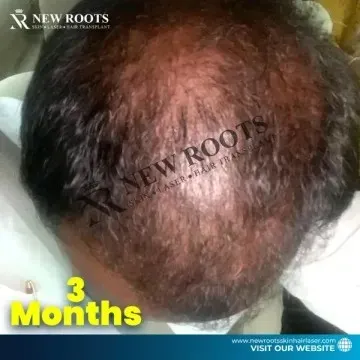
- Fine, thin hair starts to emerge
- The growth process exhibits patchy and -uneven development
- The hair begins with a soft and weak texture
The transplant process shows successful progress through this stage which produces subtle results. Over time, the hair will develop into a stronger and more uniform appearance.
Month 4 to Month 5: Noticeable Improvement
The current stage produces visible results along with increasing assurance. Patients begin to observe definite advancements in their coverage and density.
What to Expect:
- The transplanted areas will show more hair growth when the treatment starts to work.
- The procedure will enhance scalp appearance through better hair distribution.
- The process of hair development will cause hair to grow stronger and thicker over time.
The ongoing results have reached a point where people can perceive improvement. The first stage of the process will increase self-assurance because people will begin to observe their transformation.
Month 6: Midway Results
You have reached the midpoint of your hair transplant process, which will become evident to others at this time.
Results:
- The final hair growth results show that 50 to 60 percent of their final stage has been achieved.
- The hair now shows better density and coverage than before.
- The hair now shows a more natural and uniform look than before.
The hair growth process results in hair strands that become thicker and better match the existing hair, which produces a more natural appearance. This stage provides a clear indication of the final outcome.
Month 7 to Month 9: Major Transformation
This is one of the most exciting stages in the journey, where rapid improvement occurs.
What Happens:
- The process results in faster hair growth with increased hair density.
- The process results in improved hair texture and strength and thickness.
- The resulting hair extension product provides better natural hair matching capabilities.
Most patients show their most significant transformation results by the ninth month. The hair appears more abundant and healthier and more natural, which improves overall appearance.
Month 10 to Month 12: Final Result
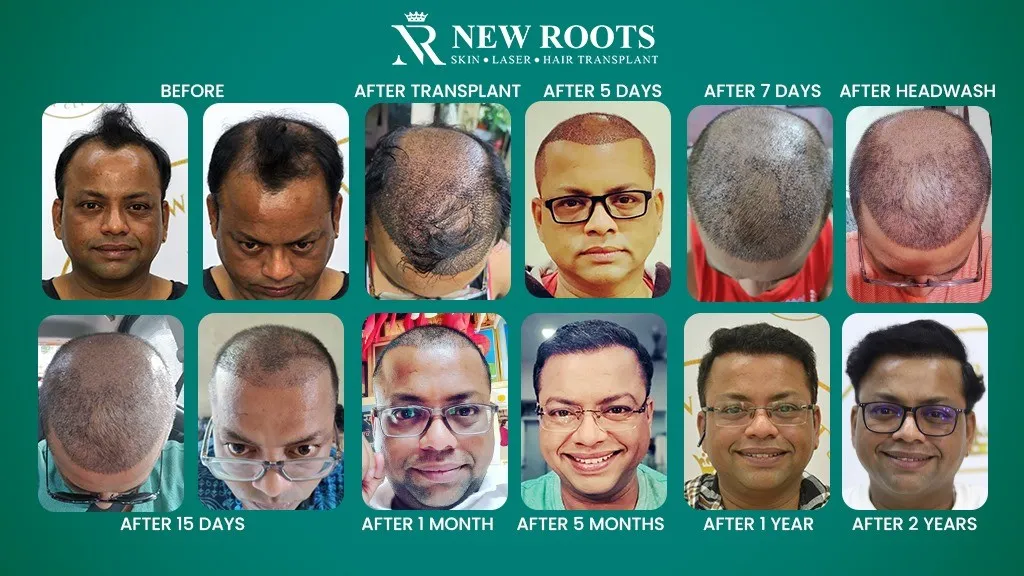
The complete results of the hair transplant procedure become visible during this final stage of the timeline. The complete results of the hair transplant procedure become visible during this final stage of the timeline.
What to Expect:
- Complete hair growth in transplanted areas
- Natural density and thickness
- Fully matured hair texture
At this point your hair behaves just like natural hair. You can cut and style your hair without any restrictions. The complete results show how successful the entire process achieved its goal of producing permanent results that look natural.
Is Hair Transplant Permanent?
People frequently ask whether hair transplants provide permanent results. The answer is yes—a hair transplant is generally considered a permanent solution for hair loss.
The transplanted hair follicles originate from donor areas located at the back and sides of the scalp which maintain their natural resistance against hair thinning.
The implanted follicles will develop into full hair according to their normal growth pattern throughout their entire lifespan.
The existing hair which has not undergone transplantation will continue to thin even though transplanted hair remains permanent.
You will need continuous hair treatment which includes ongoing care and medications and future procedures to sustain your overall hair density.
The combination of suitable post-operative care and healthy living habits and strict adherence to medical recommendations establishes the foundation for achieving enduring results.
The right technique enables a hair transplant to deliver permanent natural-looking results which boost both appearance and self-assurance.
Factors That Affect Hair Transplant Timeline
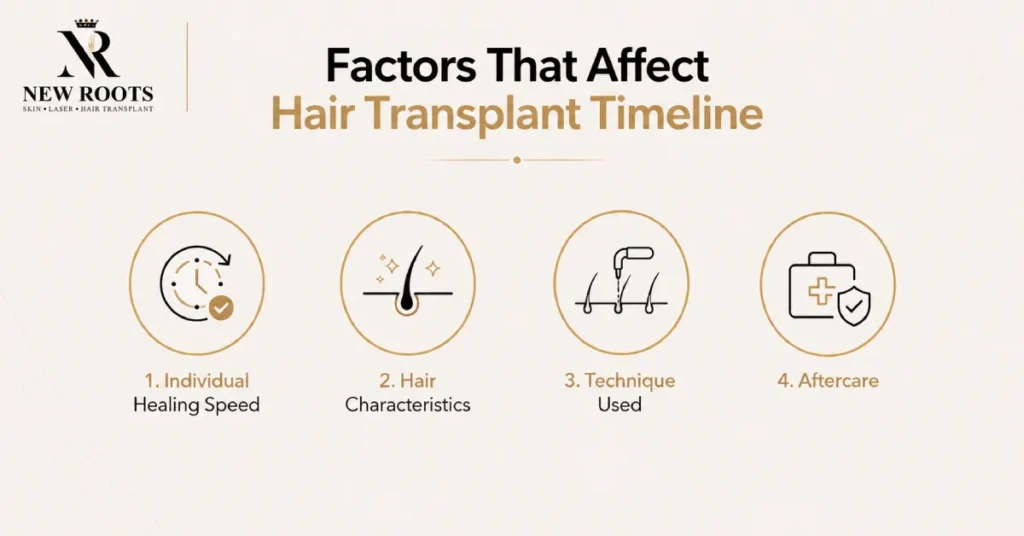
The hair transplant process requires different time frames for each patient who undergoes the same treatment method. People achieve their results through general processes which different factors in their individual makeup. The recovery process requires understanding these elements to create achievable goals which assist in recovery process management.
1. Individual Healing Speed
Every person’s body heals differently. The patients who experience minimal swelling recover faster and show visible results sooner than patients who need more time to complete their recovery process. The different healing speeds of patients determine how long their hair transplant procedure will take.
2. Hair Characteristics
The results of hair restoration procedures depend on the type of hair. Thicker, darker, or curly hair creates an illusion of greater density which develops faster than fine or light-colored hair. This impacts how quickly progress becomes visible.
3. Technique Used
FUE advanced methods provide faster recovery times and reduced pain levels which result in superior graft survival rates when compared to traditional surgical methods. The selected procedure determines both the recovery duration and the ultimate treatment outcomes.
4. Aftercare
Aftercare requires proper execution because it serves as a critical element for successful results. Patients who follow medical instructions and keep their scalp clean while avoiding dangerous activities will experience better healing results and higher graft survival rates.
Patients who do not maintain proper aftercare practices will experience treatment delays which will impact their overall results.
Your hair transplant process duration will depend on these established factors which determine your treatment progress.
Common Mistakes During the Timeline
Many patients unknowingly make mistakes which occur throughout the hair transplant process and lead to negative effects on their treatment progress as well as their final results. When you know about these common errors your ability to remain focused will improve and your results will become better.
- Expecting Instant Results: Hair growth requires time to develop and people who want immediate results will ultimately face disappointment
- Panicking During Shedding Phase: The shedding process of transplanted hair causes many people to believe that something has malfunctioned but this situation represents a standard element of the treatment
- Ignoring Aftercare Instructions: The healing process and graft protection will suffer when patients fail to adhere to essential aftercare instructions.
The schedule sets in motion an opportunity to learn patience, and reduces impatience by meeting errors almost halfway, leading to genuine, lasting outcomes.
Tips to Get the Best Results
Your transplanted hair deserves to be given the respect and attention it needs to flourish.The surgical process requires meticulous attention because even tiny errors will lead to decreased survival rates of grafts and longer waiting periods before achieving results.
- Follow All Aftercare Instructions: The doctor requires you to adhere strictly to their instructions about washing and taking medication and conducting your daily activities in order to achieve proper healing.
- Avoid Touching or Scratching the Scalp: contact with the scalp brings risks because it can harm delicate newly implanted grafts which require protection to develop properly.
- Maintain a Healthy Lifestyle: A balanced diet together with sufficient water intake and adequate sleep will create optimal conditions for faster healing and improved hair growth.
- Be Patient with the Process: The hair growth process requires time for development since hair transplants follow a predetermined schedule which people must learn to avoid feeling anxious.
The process of achieving natural results that last three partners needs people to maintain their hair treatment program while executing proper treatment methods.
Emotional Journey During Hair Transplant Timeline
The hair transplant timeline presents two different aspects which include both physical changes and the emotional process which patients encounter during their treatment.
You can develop mental readiness and self-assurance through understanding these phases as your progress results change throughout time.
- Early Phase – Excitement: Most patients experience two feelings which include hopefulness and excitement about their future results immediately after their procedure.
- Shedding Phase – Concern: The first signs of hair loss from transplanted hair causes people to feel anxious about their situation yet this reaction represents a typical element of the healing process.
- Final Stage – Satisfaction: Patients achieve complete satisfaction with their transformation after they observe their complete results.
Your hair transplant timeline journey requires you to recognize these emotional stages which will help you maintain both patience and positive thinking throughout your entire experience.
Final Thoughts
The hair transplant process requires time to complete because it demands both patience and proper maintenance work. The three stages of the process which begin with initial healing and end with complete growth lead to natural permanent outcomes.
The process includes standard stages which are shedding and slow growth that may cause discouragement to people who experience them. The common doubts about hair transplant results after two months include questions about transplanted hair loss because understanding the research schedule helps people reduce their worries.
The answer to whether hair transplant results stay permanent depends on proper execution which produces natural results that last for multiple years.
A hair transplant can transform your whole appearance and boost your self-confidence when you combine proper care with right expectations and wait for results to show.
Frequently Asked Questions (FAQs)
The answer to this question shows that transplanted hair falls which many patients ask about. The body undergoes shock loss during this shedding phase which begins in 2 to 4 weeks and marks the beginning of hair growth.
After two months of hair transplant surgery most patients show no signs of hair development. The scalp enters this phase when the hair follicles start their process to create new hair.
Patients start to see their results after 6 months yet their full results require 9 to 12 months to develop because their hair keeps growing and developing.
The answer to this question shows that hair transplant results last forever. Patients who receive transplanted hair follicles will keep their natural hair growth pattern for many years without experiencing hair loss.
Archives
- August 2026 (1)
- July 2026 (8)
- June 2026 (7)
- May 2026 (10)
- March 2023 (1)
- November 2022 (1)
- October 2022 (2)
- August 2022 (3)
- July 2022 (4)