

- New Roots
Hair Transplant Grafts: How Many Do You Really Need for Natural Results?
Table of Contents
Hair loss affects millions of people, and modern solutions like hair transplants have made it possible to restore natural-looking hair permanently. The most common question patients ask about hair transplants requires them to ask: how many hair transplant grafts do I actually need?
People need to understand hair transplant grafts because this knowledge proves essential for their upcoming procedure. Your final result depends on the number of grafts you choose because that decision determines your hair density and your total appearance.
The complete information about grafts will be explained in this guide which contains details about 3000 grafts hair transplant 10000 grafts hair transplant and methods to achieve natural hair density.
What Are Hair Transplant Grafts?
The hair transplant procedure uses small tissue samples known as grafts which the surgeon extracts from the donor site located at the back of the scalp. The natural hair pattern of each person determines the specific number of hairs that each graft can hold which ranges from one to four hairs.
The doctor who recommends 3000 grafts for your treatment actually establishes a range between 6000 and 9000 total hairs which depends on how many hairs grow from each graft.
The process needs to establish this distinction because it helps people understand what they should expect regarding the coverage and density of their results.
Why Graft Count Matters in Hair Transplant
Your procedure outcome depends on the number of hair transplant grafts which you require. Your results will display their natural appearance and density and balanced look because of this factor. The planning process needs to develop efficient graft usage which will produce optimal visual results.
- Level of Coverage: More grafts provide better coverage for larger bald areas
- Hair Transplant Density: The number of grafts influences how thick and full your hair appears
- Natural Hairline Appearance: Correct graft placement helps create a realistic and well-defined hairline
- Total Cost: Higher graft count increases the overall cost of the procedure
The use of too few grafts leads to patchy coverage because of thin areas whereas the excessive use of grafts results in an artificial appearance when distribution becomes uneven. The goal is to achieve the perfect balance between density and natural aesthetics for long-lasting results.
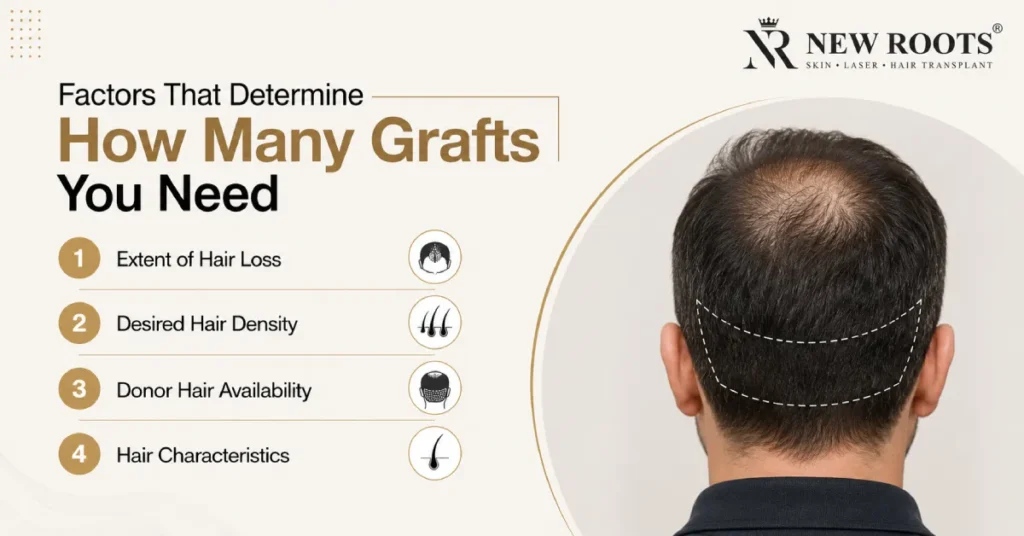
Factors That Determine How Many Grafts You Need
The process for determining required hair transplant grafts needs specific evaluation for each individual case because their unique conditions create different requirements. The evaluation process together with proper planning needs to identify the ideal combination that maintains coverage and density while ensuring long-term system performance.
1. Extent of Hair Loss
Patients who have mild hair loss require between 1000 and 1500 grafts while patients who suffer from complete baldness need 4000 grafts or more to achieve full hair restoration.
2. Desired Hair Density
You need additional grafts to achieve your goals of obtaining thicker and fuller hair. The successful achievement of hair transplant density requires specific processes that involve deliberate hair placement and planning activities.
3. Donor Hair Availability
The strength and density of the donor area determine how many grafts can be safely extracted. A weak donor area limits the total number of usable grafts.
4. Hair Characteristics
Visual density depends on three factors which include hair thickness and color contrast with the scalp and curliness. Thicker or curly hair often creates better coverage with fewer grafts.
3000 Grafts Hair Transplant: What to Expect
The 3000 grafts hair transplant represents the most popular hair restoration procedure which works effectively for individuals who experience medium hair loss.
Coverage Area
- Frontal hairline
- Mid-scalp
- Slight crown coverage
Results
The 3000 grafts procedure enables patients to achieve better hair density together with a hairline which appears natural. The number 3000 grafts serves as the optimal quantity for individuals who experience receding hairlines and moderate hair thinning.
Hair Count
Since each graft contains multiple hairs 3000 grafts can produce approximately 6000 9000 hairs.
Who Is It For?
- People who experience moderate hair loss
- People who want their hairline to look natural again
- Patients who want balanced hair thickness
The 3000 grafts hair transplant provides an excellent solution which delivers both hair coverage together with affordable pricing.
10000 Grafts Hair Transplant: Is It Realistic?
The term 10000 grafts hair transplant often creates confusion. The procedure can be performed as a single session but it occurs as an uncommon practice.
Key Considerations
- The procedure needs to be completed through several treatment sessions.
- The procedure needs to be completed through several treatment sessions.
- The procedure needs proper execution to avoid increasing its risk level.
Who Needs It?
A 10000 grafts hair transplant may be considered for:
- Patients who experience severe baldness.
- Patients who need to cover large scalp areas.
- Patients who have strong donor areas.
Reality Check
The majority of patients require fewer grafts than this total. The use of 4000 to 6000 grafts will produce natural results in most situations.
Surgeons who have experience will choose to protect the donor site by their specialized skills instead of trying to extract more grafts.
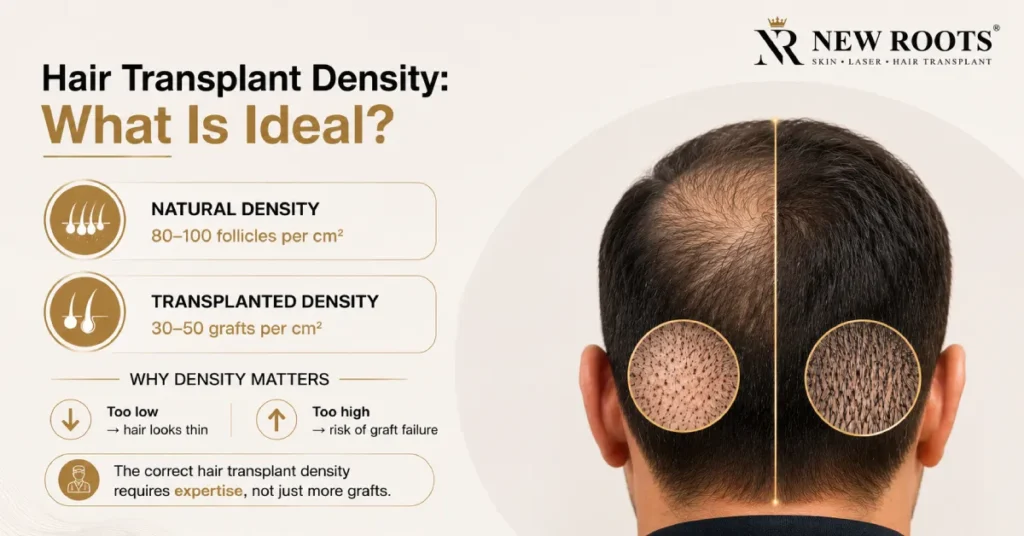
Hair Transplant Density: What Is Ideal?
The measurement of hair transplant density shows the distance between grafts that are placed on the scalp. The goal of the project requires creating an appearance of full hair volume which requires different hair density levels than actual human hair density.
Typical Density Levels
- Natural density: 80–100 follicles per cm²
- Transplanted density: 30–50 grafts per cm²
A surgeon with expertise can produce authentic results through strategic hair placement and hair positioning techniques even when working with small hair quantities.
Why Density Matters
- Too low → hair looks thin
- Too high → risk of graft failure
The correct hair transplant density requires specialized knowledge that extends beyond the need to increase the quantity of grafts used.
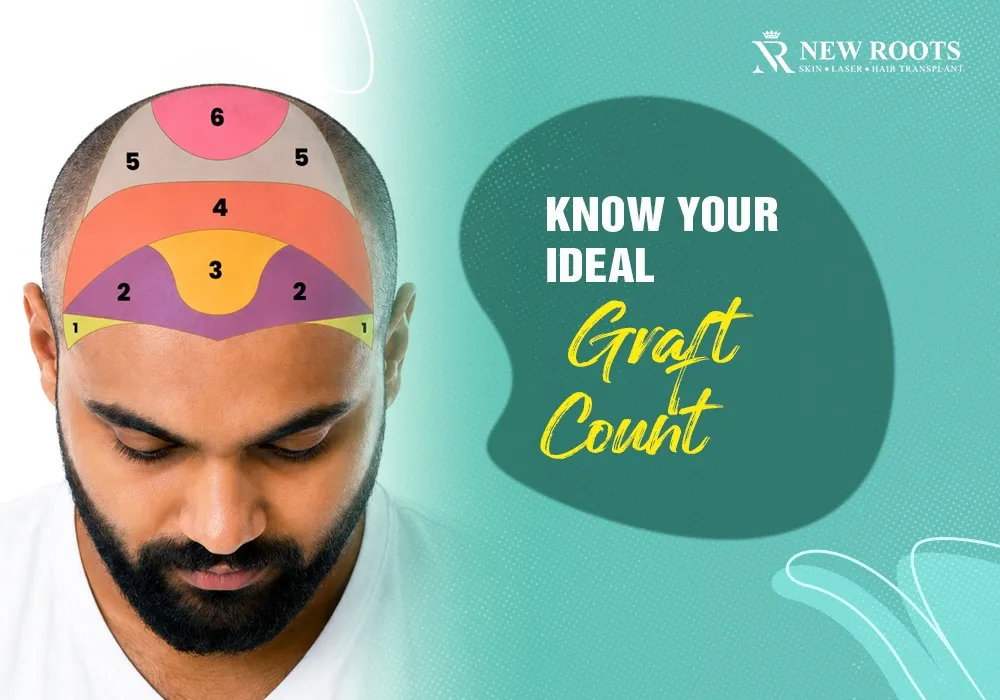
Graft Distribution: The Key to Natural Results
The proper placement of hair transplant grafts holds equal weight to the total number of grafts which doctors use during the operation.
The distribution of grafts determines the final outcome because excessive grafting without proper distribution results in artificial appearance.
The proper planning process determines the precise scalp coverage requirements which create a natural yet balanced appearance.
Strategic Distribution
- Hairline Requires Higher Density: The front area needs more grafts to create a natural and defined hairline
- Mid-Scalp Needs Moderate Coverage: This area connects the front and crown, so balanced density is essential
- Crown Area Can Have Lower Density: The crown naturally has less density, so fewer grafts are used here
The strategic distribution method creates natural results because it protects donor area reserves while distributing available grafts for effective use.
Single Session vs Multiple Sessions
The transplant procedure centers on the number of hair grafts, which determines whether it will take one session or multiple sessions to finish the work. This decision is critical because it protects safety and supports proper recovery, which leads to the most successful outcomes.
Single Session
- The procedure permits a maximum of 3000 to 4000 grafts
- The procedure works for patients who experience mild to moderate hair loss
- The process finishes within one session that lasts for approximately one day
- The procedure shows results at an earlier point, which leads to a quicker total completion time
Multiple Sessions
- The procedure needs multiple sessions when a patient has to receive 5000 or more grafts
- The procedure shows improvements because it enables the scalp to recover between different treatment stages
- The method ensures better survival rates for grafts while achieving better results in placement accuracy
- The procedure works best for patients who experience complete hair loss
The procedure requires multiple treatment sessions to protect donor area health, which helps achieve natural results for patients needing 10000 grafts through hair transplant.
Cost and Grafts Relationship
Your training includes data which extends until October of the year 2023. The total price of a hair transplant procedure depends on how many grafts the patient needs to have transplanted.
The total price of the procedure increases when the clinic applies a per-graft pricing system because the patient needs more grafts. The relationship between these two factors enables you to create your budget with better efficiency.
Pricing Structure
- Cost per Graft Basis: The clinic charges clients according to the number of grafts used in their treatment.
- Higher Graft Count = Higher Cost: The total expenses rise when additional grafts get used because they provide improved hair coverage.
The choice to use fewer grafts for cost savings results in subpar outcomes because it generates insufficient hair density and creates uneven hair distribution.
The best approach requires businesses to prioritize their long-term worth and product excellence which produces natural results instead of seeking the least expense to pay.
Common Mistakes in Graft Planning
The most common reason patients do not achieve successful hair transplant results because they do not understand how hair grafts function which requires proper planning. Natural results that last for extended periods require people to avoid making common errors.
- Choosing Too Few Grafts: Leads to poor coverage and a thin or patchy appearance
- Choosing Too Many Grafts: Can damage the donor area and affect future transplant options
- Ignoring Density Planning: Focusing only on numbers instead of proper hair transplant density can result in unnatural results
- Not Considering Future Hair Loss: Hair loss may continue, so planning ahead is important
Specialists who possess experience use proper consultation methods to prevent these problems while delivering results that achieve perfect balance between natural and artificial appearance.
How Doctors Calculate Grafts
Surgeons use their expertise to determine hair transplant grafts by following established scientific methods which enable them to achieve authentic natural results. The process requires specific scientific evaluation and assessment which results in actual patient requirements.
- The size of the affected area is measured to determine how many grafts are needed for proper coverage.
- Doctors consider the target hair transplant density to achieve a natural appearance without overcrowding.
- The donor area restricts its available grafts according to its existing strength.
Tips for Getting Natural Results
The optimal results from hair transplant grafts require practitioners to implement both their surgical skills and their ability to plan for future results.
The achievement of natural results depends on both the number of grafts and the effectiveness of their design and placement and the methods used to care for them after surgery.
- Choose an Experienced Surgeon: A skilled specialist ensures proper graft extraction and precise implantation for natural results
- Focus on Density, Not Just Numbers: The essential requirement for hair transplant procedures demands that professionals need to create balanced hair transplant density which exceeds normal limits of grafting.
- Plan for Future Hair Loss: The development of hair loss requires people to create permanent solutions which will help them maintain their appearance.
- Follow Aftercare Instructions: The right post-surgery treatment leads to better recovery results and higher chances of graft success.
Final Thoughts
People who want to undergo hair transplantation need to learn about hair transplant grafts before making their decision. Proper planning and realistic expectations remain essential
When you require 3000 hair grafts for your moderate hair loss needs or when you investigate 10000 hair grafts for your larger treatment options.
Success in a hair transplant operation depends on multiple factors which include the density of the transplanted hair and the position of the grafts and the experience level of the surgeon.
A successful hair restoration procedure will bring back your hair and your self-esteem. Natural-looking results which endure for many years require you to select an appropriate graft quantity while prioritizing high-quality results.
Frequently Asked Questions (FAQs)
The process of hair transplantation uses grafts which consist of donor tissue that contains 1 to 4 hair follicles. The hair restoration procedure uses these grafts to treat bald spots which need hair replacement to achieve a natural look.
Your hair transplant graft needs depend on your current hair loss level and the amount of hair density you want to achieve. Mild cases require between 1000 and 1500 grafts, while moderate cases need a 3000 graft hair transplant. Severe baldness needs more than 4000 grafts for treatment.
The moderate hair loss treatment requires a 3000 graft hair transplant because it provides enough hair for front and mid-scalp areas to achieve natural density and coverage.
Medical professionals perform the 10000 graft hair transplant procedure across multiple sessions. The procedure needs multiple sessions to maintain patient safety while allowing their body to heal and ensuring a high rate of graft survival.
The optimal hair transplant density for surgery requires between 30 and 50 grafts per square centimeter to create natural hair appearance which protects the scalp and maintains graft survival.
Archives
- August 2026 (1)
- July 2026 (8)
- June 2026 (7)
- May 2026 (10)
- March 2023 (1)
- November 2022 (1)
- October 2022 (2)
- August 2022 (3)
- July 2022 (4)